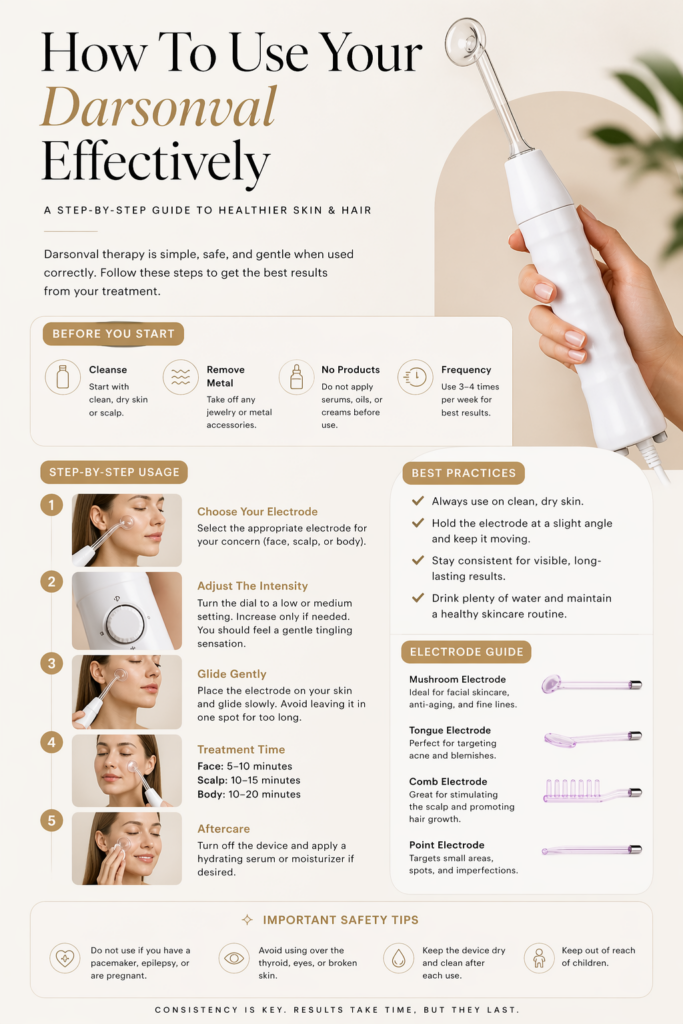
A darsonval wand is becoming one of the most popular skincare devices for acne, circulation, healthy hair and glowing skin. But having a Darsonval wand sitting on your shelf means nothing if you don’t know how to use it properly.
And this is the part most people skip. They buy the device, unbox it, turn it on, and hope for the best. But the Darsonval wand is not a plug-and-play kind of tool. It requires intention, consistency, and a basic understanding of what you are doing and why. The difference between someone who sees real results and someone who gives up after a week almost always comes down to one thing— how they use it. Not whether they use it, but how. And that distinction matters more than people think.
Clear face always!
So let’s start with the basics. Before you even touch the wand to your skin, your face needs to be clean. And I don’t mean a quick splash of water. A proper double cleanse— first with an oil-based cleanser to remove makeup and sunscreen, then with a gentle water-based cleanser to clear any remaining impurities.
The Darsonval wand works on the surface of the skin, and if that surface is covered in a layer of dirt, oil, or product residue, you are essentially creating a barrier between the device and the skin it is supposed to treat. Think of it this way— you wouldn’t paint over a dirty wall and expect a flawless finish. The same logic applies here. Clean skin is the foundation of an effective session, and skipping this step compromises everything that follows.
Choose the right electrode
Once the skin is prepped, the next thing to consider is the electrode. And this is where most beginners get confused. The Darsonval wand typically comes with several glass attachments, and each one serves a different purpose.
The mushroom-shaped electrode is the most versatile— it covers larger surface areas like the forehead, cheeks, and jawline, making it ideal for general treatment and circulation. The smaller, pointed electrode is designed for targeted work— individual blemishes, small areas of inflammation, or hard-to-reach spots around the nose. And the comb-shaped electrode is specifically meant for the scalp, stimulating blood flow to the hair follicles and supporting hair growth.
Choosing the right attachment is not a minor detail. It is the difference between a focused, effective session and a vague, unfocused one. Match the electrode to the concern, and you are already ahead.
Technique
Now, when it comes to technique, there are two main methods— contact and spark. The contact method involves gliding the electrode directly along the skin in slow, circular or sweeping motions. This is the gentler approach and is best suited for general use, improving circulation, and enhancing product absorption. The spark method, on the other hand, involves holding the electrode slightly above the skin so that small electrical sparks jump across the gap. This method is more intense and is particularly effective for targeting active acne or specific blemishes, as the sparks generate a stronger concentration of ozone on the surface.
Both methods have their place, and knowing when to use which one is key. For everyday maintenance, contact is more than enough. For stubborn breakouts or localized concerns, the spark method delivers more targeted results.
Duration and frequency
Duration and frequency matter just as much as technique. A session should last between five and fifteen minutes— no more. The skin does not need prolonged exposure to benefit, and overdoing it can lead to dryness or irritation, which defeats the entire purpose. As for how often, two to three times per week is the sweet spot for most people. Some may start with once a week and gradually increase as their skin adjusts. But daily use is not recommended, especially in the beginning. More is not always better, and in skincare, patience consistently outperforms intensity.
Post-treatment
What you do after a session is equally important. This is the ideal moment to apply active serums— hyaluronic acid, niacinamide, vitamin C— because the skin’s permeability is temporarily heightened. Products absorb deeper and work more effectively. Follow with a moisturizer to lock everything in, and if it is a morning session, sunscreen is absolutely non-negotiable. The skin is slightly more sensitive after treatment, and UV exposure without protection can do more harm than good. Think of the post-session routine as the second half of the treatment— skipping it is like running half a race and stopping before the finish line.
Safety measures
And finally, a word on safety. The Darsonval wand is generally safe for most skin types, but there are boundaries that should not be crossed. It should never be used on broken, wounded, or severely irritated skin. People with pacemakers, epilepsy, or who are pregnant should avoid it entirely. And it should never be used near the eyes or on the lips.
These are not suggestions— they are non-negotiables. Respecting the limits of the device is just as important as knowing how to use it. Because the device itself is only as effective as the person using it. Use it with intention, use it with consistency, and use it with respect for what it can and cannot do. That is the real guide— not just knowing the steps, but understanding why each one matters.
Choose SkinEnergy for glowing skin and healthy hair!